
* "Be Peace"
* "Do Peace"
HOW TO....
Having peace in the world begins with being genuinely peaceful within yourself. Your inner peace then expands outward into calm, helpful responses to other individuals and groups. Move from there to help your community, your nation, and the world.
WAYS TO "BE PEACE"
Discover your own best contemplative practice, then learn and employ known methods for peaceful interpersonal communication, conflict resolution, and high-emotion de-escalation

Some Contemplative Methods for Acquiring Inner Peace
Sound/Mantra/Words
-
Mantra Meditation (Hinduism & Buddhism)
-
A form of meditation that involves constant repetition of a word, phrase, or sound to focus the mind and achieve a state of inner peace and calm.
-
-
Lectio Divina/Contemplative Prayer (Christian)
-
A meditative reading of scripture involving four steps: reading, meditation, prayer, and contemplation.
-
https://bustedhalo.com/ministry-resources/lectio-divina-beginners-guide
-
-
Shamanic Drumming (Native American, African)
-
Use of rhythmic drumming to enter altered states of consciousness for healing and insight.
-
-
Centering Prayer (Christian)
-
A receptive method of Christian silent prayer in which the indwelling Presence of God is touched through the holding of a single related word in one's mind.
-
-
Chanting:
-
Dhikr (Islam)
-
The repetitive chanting of God's names or attributes in order to attain spiritual tranquility and mindfulness.
-
-
Gregorian (Roman Catholic Christian)
-
-
Vocal Toning (worldwide traditions)
-
Slightly different from mantra or chanting, it is the creation of an always externally heard spoken sound using the voice – generally a single vowel – which then resonates throughout the rest of the physical body as well as the mind, creating peace on all levels.
-
-
Griot Storytelling (prehistoric West Africa)
-
Meditative listening and reflection on moral and communal lessons through oral tradition.
-
- Singing Bowl Meditation (pre-Buddhist Tibet)
-
See also "Music" and "Nature" sections on the BE INSPIRED page of our website.
Breath/Body Awareness
-
Zazen Meditation (Japanese Buddhism)
-
Seated meditation focusing on posture, breath, and awareness to cultivate mindfulness and insight.
-
https://zmm.org/teachings-and-training/meditation-instructions/
-
-
Vipassana Meditation (Indian Buddhism)
-
Insight meditation emphasizing awareness of bodily sensations and mental states to develop equanimity and clarity.
-
https://www.lionsroar.com/how-to-practice-vipassana-insight-meditation
-
-
Pranayama Meditation/Breath Control Yoga (Hinduism)
-
A cornerstone of yoga, Pranayama involves controlled breathing exercises aimed at enhancing physical and mental well-being.
-
-
Holotropic Breathwork (California USA - Stanislov & Christina Grof)
-
A therapeutic technique involving accelerated breathing patterns to access altered states of consciousness, facilitating emotional release and self-awareness
-
Body Movement
-
Walking Meditation (Buddhism)
-
A practice that combines movement with mindfulness, walking meditation helps in grounding and calming the mind.
-
-
Labyrinth Walking (prehistoric India & Europe; Greece & Rome; Christian Europe)
-
Walking a labyrinth offers a contemplative pathway that can lead to emotional and spiritual experiences.
-
-
Sufi Whirling (Turkey, Middle East)
-
A form of physically active meditation involving spinning to achieve spiritual ecstasy and inner peace.
-
-
Qigong (China)
-
A practice integrating movement, breath control, and meditation to cultivate and balance the body's energy.
-
-
Tai Chi (China)
-
A gentle martial art combining slow, deliberate movements with deep breathing to enhance balance, flexibility, and tranquility.
-
https://taichiforhealthinstitute.org/programs/tai-chi-for-beginners/
-
-
Dance/Drumming Rituals
-
Rhythmic, repetitive practices to synchronize body, mind, and spirit
-
https://kripalu.org/living-kripalu/benefits-drumming-body-mind-and-spirit
-
Visual
-
Mandala Creation & Use (Hinduism & Buddhism) - A mandala can serve as a calming creative expression or be used repeatedly as a meditative practice. https://kripalu.org/living-kripalu/using-mandalas-practice-gratitude-and-mindfulness
-
Mandala Creation
-
The process of creating a mandala can itself be a pathway for meditation and centering. It facilitates imaginative expression while soothing and nourishing the psyche and spirit.
-
-
Ongoing Mandala Use
-
As a mandala is repeatedly contemplated to the point of saturation, all the details of the image – shapes, patterns, colors – eventually become fully internalized as symbols of the practitioner’s initially chosen peaceful intention for the meditation.
-
-
-
Deity Meditation (Tibetan Buddhism)
-
In this tantric practice, the meditator visualizes him/herself as an awakened being, usually as sitting among those who appear in an embellished celestial mansion at the center of a mandala.
-
- Christian Orthodox Icon Meditation
- Icons (of Christ and/or saints) are considered powerful tools that link the practitioner to the spiritual world, providing a meditative bridge to the icon's true persona in a realm beyond space and time.
- https://www.youtube.com/watch?v=M9lTwlRd1Po&t=76s
- Dream Yoga (Tibetan Buddhism)
-
A Tantric Buddhist meditative practice that utilizes insights received in lucid dreams to bring noticeably positive and peaceful changes into the participant’s waking life.
-
https://resources.soundstrue.com/transcript/andrew-holecek-the-path-of-dream-yoga/
-
-
Stoic Reflection (ancient Greece & Rome)
-
Philosophical practice involving journaling and contemplation to develop resilience and inner peace.
-
https://strongstoic.substack.com/p/the-stoic-guide-to-self-reflection
-
-
Ignatian Contemplation / Imaginative Prayer (Roman Catholic Christian)
-
A practice in which the participant imagines themselves actually being inside one of the Christian Gospel stories so that the events of Jesus’ life become extremely real, poignant, and meaningful and they feel a deep closeness to God.
-
Temperature
-
Sweat Lodge Ceremony (Native American)
-
A purification ritual involving steam and prayer to cleanse the body and spirit.
-
https://saunamarketplace.com/the-native-american-sweat-lodge/
-
-
Inner Fire / Tummo Meditation (Tibetan Buddhism)
-
Tummo is a powerful practice in Tibetan tantric Buddhism that uses breath, visualization, and physical-body techniques to generate inner heat that can then clear energy blockages, calm the mind, and lead to states of clarity, peace, and bliss. A teacher or mentor is needed to facilitate this advanced practice.
-
-
Wim Hof Method (Netherlands - athlete Wim Hof)
-
Combines specific breathing techniques, cold exposure, and meditation to improve physical and mental health.
-
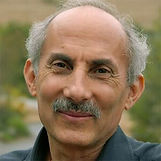
Metta Meditation (Peace/Love Meditation) - Jack Kornfield
-
Guided Metta Meditation Video: "Becoming a Beacon of Kindness." Jack Kornfield gives a guided Metta Meditation, leading listeners to open their hearts and become beacons of kindness within themselves and outward to others.
-
Target Audience: Anyone who is interested in meditation, especially Metta Meditation, which develops inner peace and then sends it out to others.
-
Format: Free video online.

Nonviolent Communication (NVC) - Center for Nonviolent Communication (CNVC)
-
Video: "Street Giraffe." Alexandra Norman leads a session in NVC. Sharing humorous personal experiences, she guides participants in NVC methods that help deepen connection and understanding. The video underscores the transformative power of NVC in both fostering peace and enhancing interpersonal relationships.
-
Target Audience: Anyone who is interested in peacebuilding.
-
Format: Free video online.

Conflict Resolution - Dorothy Walker
-
TED Institute Video: "3 Ways To Resolve a Conflict." "Anybody can help resolve a conflict," says Dorothy Walker, who is a mediator and facilitator. With three simple steps, she shares how to use positive energy to solve conflicts between friends, co-workers, strangers, kids, and beyond..
-
Target Audience: Anyone who is interested in learning peacebuilding through conflict resolution.
-
Format: Free video online.

De-Escalation of High-Tension Situations - Chris Collier, VIVID Learning Systems
-
Video: "Conflict De-Escalation Techniques." Chris Collier presents the basics of what can be done to de-escalate situations when emotions run extremely high. His suggestions include being calm yourself and taking specific steps: be aware of the environment, appear non-threatening, make an empathetic connection, offer options, and get to agreement.
-
Target Audience: Anyone who is interested in peacebuilding through de-escalating high-tension situations.
-
Format: Free video online.
WAYS TO "DO PEACE"

What Children Can Do to Grow Peace
1. Peace in Themselves
-
Take a deep breath when upset — calm bodies help calm minds.
-
Use words to talk about feelings instead of hitting or shouting.
-
Practice kindness — say “please,” “thank you,” and “sorry.”
-
Find peaceful spaces — reading, drawing, being in nature, or quiet time.
-
Believe that problems can be solved without hurting anyone.
2. Peace with Friends and Family
-
Share and take turns — fairness keeps friendships strong.
-
Listen when others speak — everyone deserves to be heard.
-
Include others — invite new or shy kids to play.
-
Forgive mistakes — everyone makes them, and forgiveness helps people grow.
-
Stand up for someone being teased or left out — peace means caring for others.
3. Peace in School
-
Use kind words and gentle hands.
-
Solve disagreements with talking, not fighting.
-
Work together on projects — teamwork builds respect.
-
Ask for help from a teacher or friend when things feel hard.
-
Celebrate differences — everyone’s background and ideas add to the group.
4. Peace in the Community
-
Help others — pick up litter, share food, or help a neighbor.
-
Take care of animals and plants.
-
Draw or write messages of peace and kindness to share at home or school.
-
Be honest and keep promises — trust is the heart of peace.
-
Notice when someone is sad and offer comfort.
5. Peace in the World
-
Learn about children in other countries — how they live, play, and dream.
-
Be curious, not afraid, of differences.
-
Use art, music, or stories to express care for the planet and people.
-
Save water, reuse materials, and protect nature.
-
Believe that even small acts of kindness can make the world better.
Sources:
UNICEF Learning for Peace, 2016
UNESCO Culture of Peace Programme, 2020
Elise Boulding, Cultures of Peace, 2000
Montessori & Reardon, Educating for Peace, 2011

Other Activities Related to Peace
-
Learn a Peace song - or compose one yourself and share it with thepeacestream@gmail.com.
-
"Sing Peace Around the World" (https://singpeacearoundtheworld.com/)
-
John Lennon's "Imagine"
-
-
Draw a picture or make a poster for Peace (https://www.pinterest.com/cyndyfeasel/peace-art/). Share your creation with us at thepeacestream@gmail.com.
-
Get friends together and start a Peace Pledge Club (kidsforpeace peace pledge program); adults can share in a virtual Peace Circle (https://www.lffp.org/virtual-peace-circles.html).
-
Make up a Peace play (teachkidshow - write a play). Share it with thepeacestream@gmail.com.
-
Participate in Pause for Peace each day (https://kidsforpeaceglobal.org/pauseforpeace/), or join a group from our FIND A GROUP page. You can also choose an item (e.g., a stone, cup, picture, etc.) as a special symbol of peace, and get it out just before you Pause for Peace or meet with your group.
-
Learn more about Peace (https://en.wikipedia.org/wiki/Peace).

Suggestions from United Nations "International Day of Peace Toolkit"
-
Organize a peace walk or run.
-
Hold a “Sports Day for Peace.”
-
Host a peace-themed film night.
-
Volunteer for a peace organization.
-
Start a community garden for peace.
-
Host a peace concert in your community.
-
Organize an exhibit of art for peace.
-
Write a poem for peace.
Toolkit

Ideas for Creating Ongoing Home and Classroom Peace
-
Create/obtain and put in numerous places around your home or classroom a variety of items that will be constant visual reminders of peace: pictures, posters, bulletin boards, mobiles, tactile objects. Change some of them periodically, leaving others there permanently. Children subconsciously absorb whatever is consistently in their environment.
-
Have daily routines - and perhaps a dedicated daily time - related to peace, including such things as a short "Pause for Peace" (6 pm or noon - or any chosen time), peaceful music (see "Music" on our BE INSPIRED page), talking with the child/ren about a specific aspect of peace, learning/practicing mindfulness / nonviolent communication / conflict resolution, inviting friends/visitors to come discuss how they are peacemakers or how to have a more peaceful community and world, all sharing images/visions of what peace could look like.
-
Plan together and engage in a project related to peace. (See suggestions in other spaces above.)